
Luxury yacht insurance is specialized marine coverage for vessels typically worth $300,000 or more. It provides agreed-value hull protection, multi-million-dollar liability limits, crew coverage and worldwide navigation, which standard boat policies rarely include. Whether your yacht is worth $500,000 or $5 million, it needs coverage that matches its value, its systems and the way you use it.
Many yacht owners assume standard marine insurance is enough. It usually isn’t. Luxury yachts face unique risks, operate in demanding environments and carry exposures that typical boat insurance was never designed to cover.
Key Takeaways
- Most insurers treat vessels worth more than $300,000–$500,000, or longer than about 40 feet, as high-value yachts.
- Standard boat policies often have hull and liability limits that are too low for a luxury yacht.
- High-value yacht insurance adds agreed-value hull coverage, $2M–$5M+ liability, crew (Jones Act) protection and worldwide navigation.
- Premiums typically run about 1%–2.5% of the yacht’s insured value each year.
- Chartering your yacht usually requires commercial coverage or a specific endorsement.
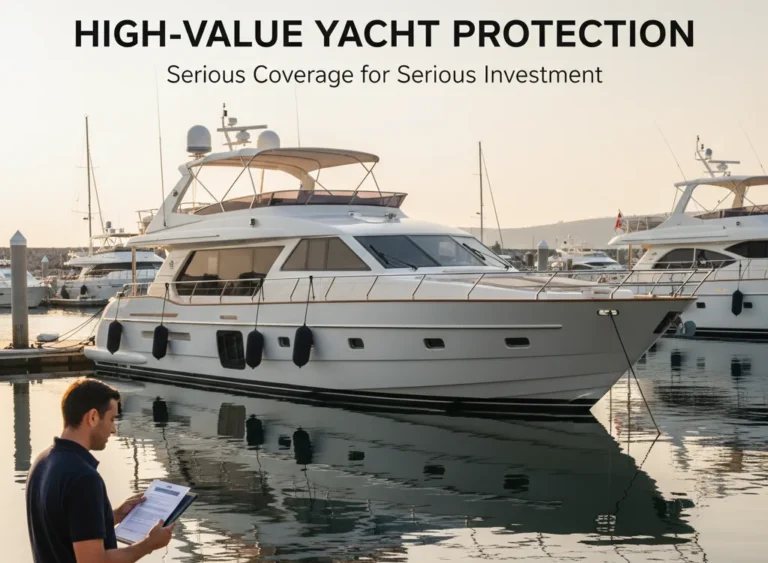
Luxury motor yacht at anchor – high-value yacht insurance
What Qualifies as a High-Value Yacht?
There’s no universal industry definition, but high-value yachts share several traits that separate them from standard recreational boats.
1. Value Thresholds
Most insurers consider vessels valued above $300,000–$500,000 to be high-value yachts that need specialized coverage. Once a vessel reaches seven figures, a standard marine policy is rarely adequate.
Value alone isn’t the deciding factor, though. A $400,000 sportfishing boat and a $400,000 motor yacht can call for very different coverage.
2. Size and Complexity
Yachts are typically 40 feet or longer, although smaller vessels with exceptional value or features can also qualify. The real distinguishing factor is complexity: multiple staterooms, sophisticated onboard systems, professional-grade electronics and luxury amenities that standard policies aren’t built to address.
3. Usage Patterns
High-value yachts often make extended cruises and international voyages, or carry a professional captain and crew. Recreational boat policies generally don’t contemplate these exposures.
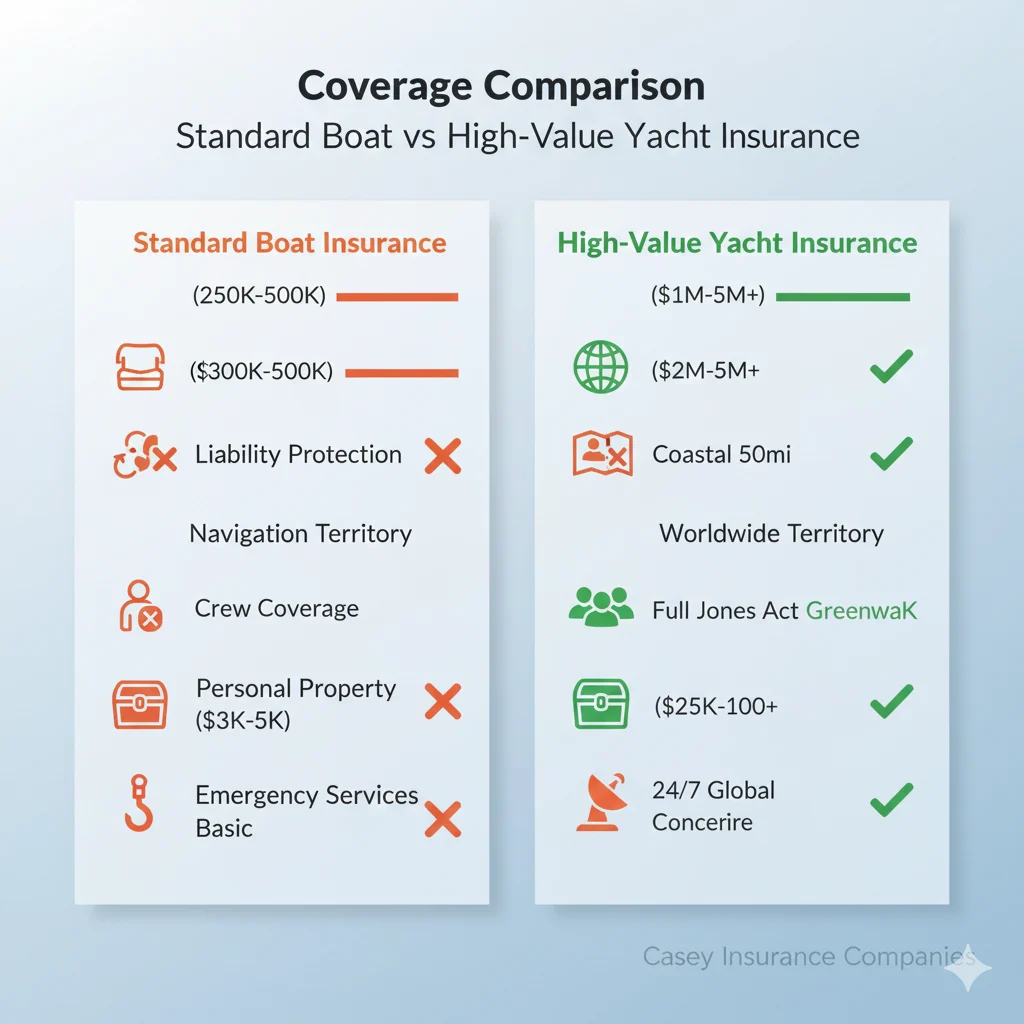
Standard Boat Insurance vs. High-Value Yacht Insurance
| Feature | Standard Boat Policy | High-Value Yacht Policy |
|---|---|---|
| Hull coverage | Often capped; may use actual cash value | Agreed value matched to the yacht |
| Liability limits | Typically $300K–$500K | $2M–$5M or more |
| Navigation area | Usually coastal (often 50–100 miles offshore) | Regional to worldwide, tailored to your plans |
| Crew coverage (Jones Act) | Rarely included | Available through P&I |
| Pollution liability | Limited | Often $500K–$1M or more |
| Personal effects | Often $3K–$5K | $25K–$100K+, with scheduled items |
| Emergency assistance | Basic towing | 24/7 global assistance |
Typical ranges only. Actual terms vary by carrier and policy.
Why Standard Marine Insurance Falls Short for Luxury Yachts
1. Inadequate Coverage Limits
Many standard boat policies are built around vessels worth well under $500,000. If your yacht is worth $1.5 million and your policy is capped far below that, a total loss could leave you short by $1 million or more.
Even when a standard policy offers a higher limit, its components are usually designed for smaller boats and don’t scale to million-dollar vessels. Understanding yacht insurance requirements by state is also part of making sure your coverage is complete.
2. Insufficient Liability Protection
Standard policies commonly offer $300,000–$500,000 in liability coverage. For high-net-worth yacht owners, that leaves serious exposure: a single guest injury can lead to a multi-million-dollar lawsuit.
When a claim exceeds your policy limits, your other assets, including homes, investments and business interests, can be at risk. Most luxury yacht owners need $2 million–$5 million or more in liability protection, often supported by an umbrella policy.
3. Limited Navigation Territories
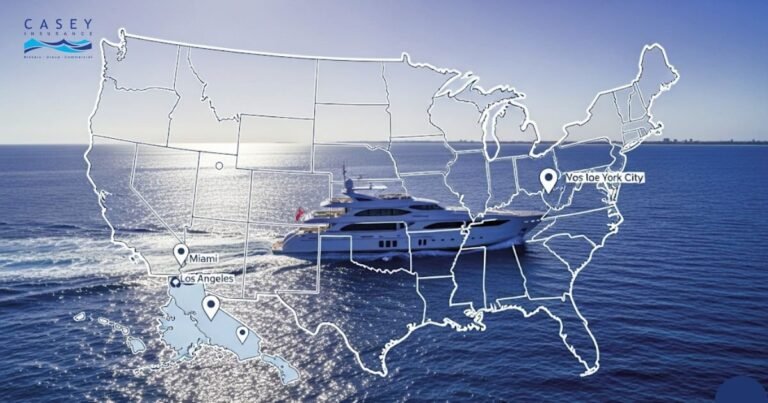
Many standard policies restrict coverage to coastal waters, often within 50–100 miles of shore. If you’re planning Caribbean cruising, a transatlantic passage or a Mediterranean season, you may have no coverage once you leave the approved area.
High-value yachts are built for serious cruising, and the insurance should match where the vessel actually goes. (For more detail, see Worldwide Navigation Coverage below.)
4. Limited Crew Coverage
Standard boat insurance generally assumes the owner runs the boat. Once you hire a captain, mate, chef or steward, you need protection for:
- Crew injuries under maritime law, including Jones Act claims
- Crew medical expenses, maintenance and cure, and repatriation
- Liability arising from crew actions
- Crew personal belongings
Most standard policies provide little or no protection for these exposures. We cover crew protection in detail under Enhanced Liability Protection below.
Unique Risks Facing High-Value Yachts
1. Complex Mechanical and Electronic Systems
Modern luxury yachts carry stabilizers, advanced propulsion, extensive electronics and integrated automation, often worth hundreds of thousands of dollars. When these systems fail, repairs can quickly reach six figures.
Standard policies often exclude or tightly limit coverage for mechanical breakdown and electronics failure. Those are exactly the problems that complex yacht systems tend to have. Ask whether your policy offers machinery breakdown coverage as an option.
2. International Operations and Foreign Waters
Cruising abroad brings challenges that domestic boating doesn’t:
- Meeting foreign insurance and port requirements
- Covering incidents in international waters
- Handling crew documentation and work permits
- Dealing with customs and temporary importation rules
3. Extended Time Away from Home Port
Many luxury yacht owners cruise for months at a time, thousands of miles from home. That creates needs most standard policies don’t anticipate:
- Emergency repairs in remote locations
- Long-distance towing
- Crew replacement in foreign ports
- Medical evacuation after serious injuries
- Extended stays while repairs are completed
High-value yacht insurance often includes 24/7 assistance services to help in these situations.
4. Hurricane and Named Storm Exposure
Yachts in hurricane-prone regions face substantial storm risk. A direct hit can total even a well-built vessel or cause hundreds of thousands of dollars in damage. (Track storm activity at the NOAA National Hurricane Center.)
Standard policies may offer limited named-storm coverage, carry high storm deductibles, or require you to move the yacht to an approved location on short notice, which can be difficult mid-cruise. Our High-Value Yacht Hurricane Coverage provides named-storm protection designed for luxury vessels, including help with hurricane plans.
5. Environmental Liability
Larger yachts carry more fuel, which increases the risk and cost of a spill. Under federal law, including the Oil Pollution Act of 1990, owners can be responsible for cleanup costs, damages and penalties. A significant spill can cost several hundred thousand dollars or more.
Pollution limits on standard policies are often modest. High-value yacht policies commonly provide $500,000 to $1 million or more in pollution liability coverage.
Key Components of High-Value Yacht Insurance
1. Hull and Machinery Coverage
High-Value Yacht Hull Coverage protects your vessel’s structure and mechanical systems with:
- Agreed value protection: You and the insurer agree on the yacht’s value when the policy is written. After a covered total loss, you receive that amount without a depreciation dispute. (Agreed value vs. actual cash value explained.)
- All-risk coverage: Protection against all physical loss or damage unless it’s specifically excluded, instead of the named-perils coverage found in some standard policies.
- Total loss and constructive total loss: When repair costs exceed a threshold set in the policy (often 75%–100% of agreed value), the insurer may declare a constructive total loss and pay the agreed value.
- Partial loss coverage: Repair or replacement of damaged components, with many policies allowing original equipment manufacturer (OEM) parts.
2. Enhanced Liability Protection
High-Value Yacht Liability coverage typically includes:
- Higher limits: $2 million to $5 million or more, matched to your assets and exposure.
- Protection and Indemnity (P&I): Maritime liability coverage for crew injuries, passenger and guest claims, collision liability and wreck removal.
- Jones Act and crew liability: Under the Jones Act (46 U.S.C. § 30104), injured crew can sue their employer for negligence. Combined with maintenance and cure and unseaworthiness claims, this can lead to larger awards than a typical workers’ compensation claim.
- Legal defense costs: In many yacht policies, defense costs are paid in addition to the liability limit, so the full limit stays available for settlements. Check your policy wording to confirm.
Uninsured boater coverage is also commonly available. It’s first-party protection that pays for your injuries when an uninsured or underinsured vessel is at fault.
3. Personal Effects and Equipment
High-value yachts carry valuable contents that need proper coverage:
- Electronics and navigation equipment, often worth $100,000–$300,000 or more
- Luxury furnishings, artwork and décor
- Tenders and water toys (jet skis, diving gear and similar), often worth $50,000–$200,000
- Owner and guest personal property
- Provisions and supplies for extended cruising
Standard personal property limits of $3,000–$5,000 are far below what a yacht requires. Yacht policies commonly provide $25,000–$100,000 or more in base coverage, plus scheduled coverage for specific high-value items.
4. Crew Coverage and Charter Endorsements
If you employ a professional crew or charter your yacht, you’ll need:
- Crew coverage: Protection for the captain, mates, engineers, stewards and chef under maritime employment law.
- Charter coverage: If you charter your yacht to offset ownership costs, you need appropriate commercial coverage. Most personal yacht policies exclude charter use unless you add a specific endorsement approved by the insurer.
Charter Commercial Lines Insurance covers yachts used for bareboat, captained or demise charter operations.
5. Worldwide Navigation Coverage
Unlike standard policies that limit you to coastal waters, high-value yacht insurance can extend to the places you actually cruise. Our High-Value Worldwide Navigation coverage can include:
- Caribbean, Mediterranean and South Pacific cruising
- Transatlantic and transpacific passages
- Seasonal moves between cruising grounds
- Extended international stays
- Help meeting foreign insurance requirements
Navigation limits can be adjusted as your plans change, so you aren’t paying for waters you’ll never visit.
6. Emergency Assistance and Support Services
Premium yacht insurance often includes services that standard policies don’t:
- 24/7 global emergency assistance
- Coordination of repairs in foreign ports
- Crew travel and replacement
- Medical evacuation and repatriation
- Customs and documentation help
- Access to a global network of marine surveyors and repair yards
- Emergency parts shipping
These services matter most when something goes wrong far from home.
How Much Does High-Value Yacht Insurance Cost?
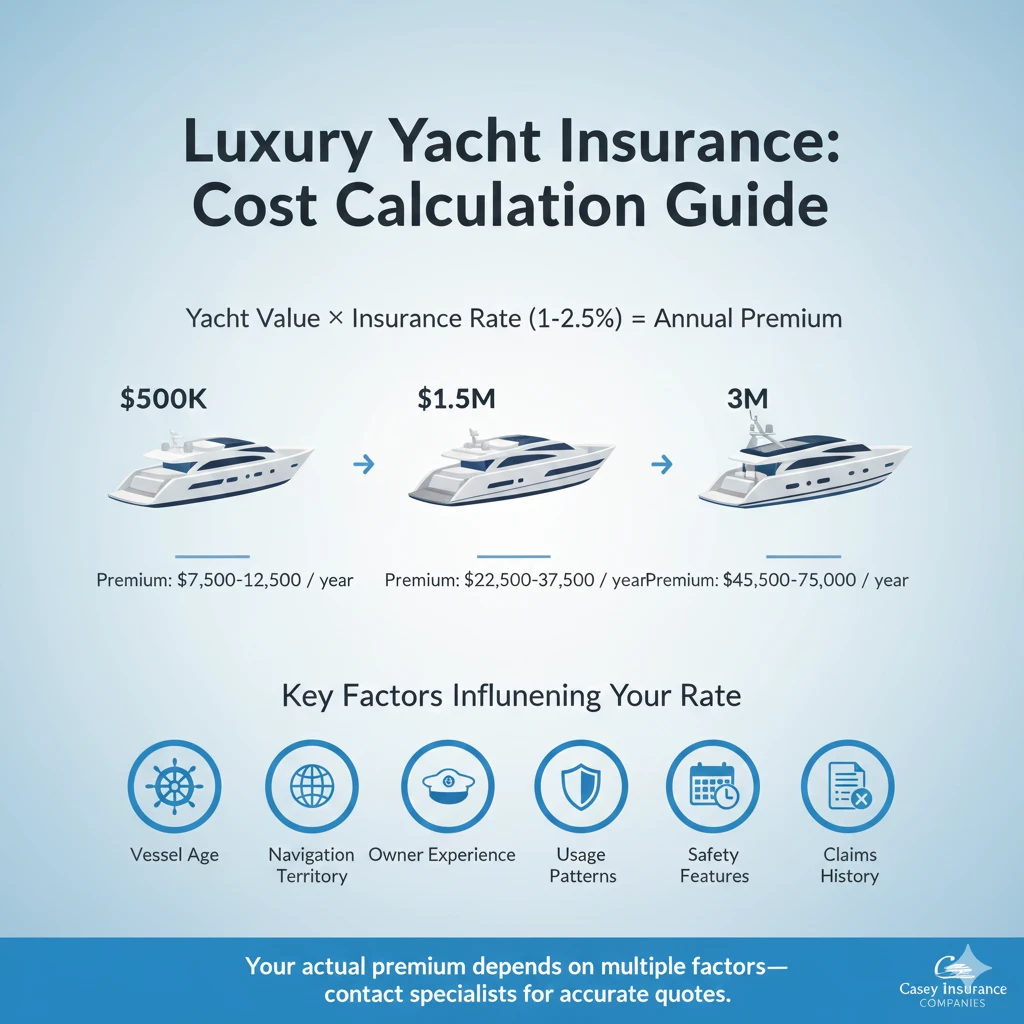
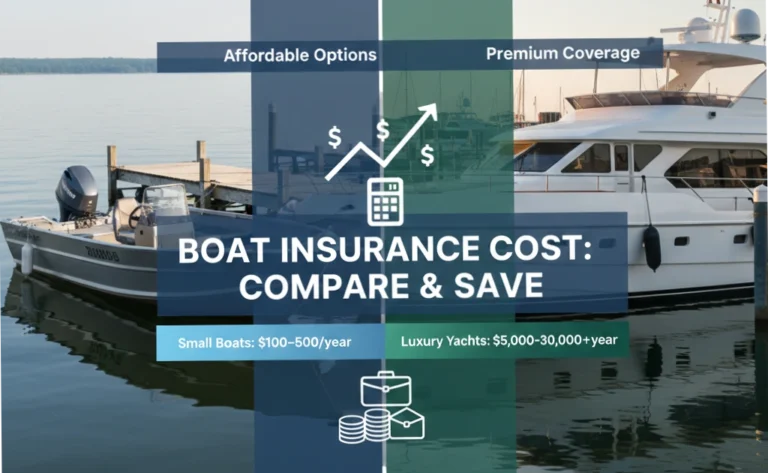
Luxury yacht insurance is a significant expense, but it scales with the yacht’s value and how you use it. Annual premiums typically run about 1%–2.5% of the yacht’s insured value.
| Yacht Value | Estimated Annual Premium* |
|---|---|
| $500,000 | $5,000–$12,500 |
| $1,000,000 | $10,000–$25,000 |
| $2,000,000 | $20,000–$50,000 |
| $5,000,000 | $50,000–$125,000 |
Actual premiums depend on the factors below, the carrier and current market conditions.
Premium Factors
- Vessel type and construction: Powerboats often cost more to insure than sailboats because of their speed and complex machinery. Build quality and builder reputation also matter.
- Age and condition: Newer yachts (under about 10 years) usually get better rates. Older yachts with recent surveys and good maintenance records are viewed more favorably.
- Navigation territory: Worldwide coverage costs more than regional cruising, and hurricane-prone areas typically carry higher premiums or named-storm deductibles.
- Usage: Liveaboards and charter operations generally pay more than seasonal cruisers.
- Owner experience: Experienced operators with clean records usually receive better rates. First-time owners and those with prior claims may pay more.
- Crew: A professional captain and crew increase coverage needs but may earn credits for professional operation.
- Deductibles: Higher deductibles lower premiums. Yacht deductibles often range from about $5,000 to $50,000, depending on value.
Get a High-Value Yacht Insurance Quote
Is It Worth the Investment?
On a $2 million yacht, $30,000–$40,000 a year is about 1.5%–2% of the vessel’s value. Compared with the cost of an uninsured or underinsured loss, or a liability judgment that reaches your other assets, proper coverage is sound risk management.
How to Choose the Right High-Value Yacht Insurance
Assess Your Coverage Needs
- Current value: Get a professional appraisal or survey; don’t rely only on the purchase price.
- Cruising plans: Base coverage on where you’ll actually operate.
- Crew: Professional captain, full crew or owner-operated.
- Charter plans: Any income from the yacht calls for commercial coverage or an endorsement.
- Asset protection: Your total net worth should guide your liability and umbrella limits.
Compare Specialized Yacht Insurers
Not every marine insurer understands luxury yachts. Look for:
- Specialization in high-value vessels
- Experience with your yacht’s type and size
- Global claims handling
- Relationships with international repair facilities
- Responsive service and knowledgeable underwriters
Verify Coverage Details
Before you bind a policy, confirm:
- The agreed value matches the current market value
- Navigation limits cover your actual cruising plans
- Liability limits adequately protect your assets
- Personal property and equipment limits match their real value
- Crew coverage is included, if you need it
- Named-storm coverage and deductibles fit your region
- Pollution liability limits are adequate
Review Exclusions Carefully
Common exclusions include:
- Wear and tear and gradual deterioration
- Manufacturer defects
- Racing, unless specifically endorsed
- War and nuclear events
- Intentional or illegal acts
- Commercial or charter use, unless endorsed
Knowing what’s excluded lets you close gaps through endorsements or other policies, or knowingly accept the risk.
Bundling Yacht Insurance with Other High-Value Coverage
Many yacht owners benefit from coordinating their marine insurance with their other high-net-worth coverage.
What to Consolidate
- High-value yacht insurance
- Home insurance for primary and secondary residences
- Auto insurance for luxury and collector vehicles
- Valuable collections coverage for art, jewelry and collectibles
- Excess liability (umbrella) coverage across all policies
Benefits of Bundling
- Multi-policy discounts: Many carriers offer savings, often around 10%–20%, when you place several high-value policies together.
- Coordinated coverage: One advisor reviewing everything helps avoid gaps and overlaps.
- Simpler claims: One point of contact makes claims easier to manage.
- Service: High-value clients often get dedicated representatives and enhanced service.
Working with an Experienced Yacht Insurance Specialist
High-value yacht insurance requires expertise that most general agents don’t have.
What to Look For
Choose an agent or broker who:
- Focuses on high-value marine insurance
- Understands luxury yachts and how they’re operated
- Has access to multiple specialized yacht insurers
- Provides personalized, ongoing service
- Has a strong record with clients like you
- Offers global support and emergency assistance
Questions to Ask
- “How many yachts valued over $500,000 do you insure?”
- “What experience do you have with [your yacht type and size]?”
- “How are claims handled in foreign ports?”
- “What emergency assistance do you provide worldwide?”
- “Can you provide references from similar clients?”
- “How quickly can coverage be adjusted if my cruising plans change?”
Protect Your Yacht and Your Wealth
A standard boat policy that works for a $50,000 fishing boat can leave a million-dollar yacht badly exposed through low limits, restricted navigation and no crew protection. High-value yacht insurance costs more because it does much more: agreed-value hull coverage, multi-million-dollar liability, worldwide navigation and support wherever you cruise.
Our Private Client Luxury Yacht Insurance specialists understand high-value vessels and the owners who run them. Contact us or call for a personalized review of your coverage.
FAQs About High-Value Yacht Insurance
Most insurers treat vessels worth more than $300,000–$500,000, or longer than about 40 feet, as yachts that need specialized coverage. Complexity also matters. A 45-foot yacht with multiple staterooms, advanced systems and long-range cruising plans may need yacht-specific coverage even at $350,000, while a simpler 45-foot fishing boat may be fine under an enhanced recreational policy.
Annual premiums for a $1 million yacht typically range from about $10,000 to $25,000 (1%–2.5% of value). The actual cost depends on vessel type, age, navigation area, hurricane exposure, crew, claims history and deductible.
No federal law requires recreational yacht insurance, but it’s often required in practice. Lenders require it for financed yachts, most marinas require liability coverage, and many foreign countries require proof of insurance before you can enter their waters.
Protection and Indemnity (P&I) is maritime liability coverage. It covers bodily injury to crew, guests and others, damage to other vessels and property, wreck removal and related legal costs. It’s a core part of high-value yacht insurance.
Most high-value yacht policies cover named-storm damage, but often with a separate named-storm deductible and a required hurricane plan. Some policies limit coverage in certain areas during hurricane season. Review your named-storm terms before the season begins.
Yes. Effective strategies include:
Raise your deductible: Moving from $10,000 to $25,000 can noticeably lower your premium.
Install safety systems: Fire suppression, monitoring and tracking systems may earn discounts.
Earn credentials: A captain’s license or advanced boating certification shows competence.
Stay claims-free: Many insurers reward claim-free years with lower premiums or deductibles.
Bundle policies: Combining yacht, home and auto coverage often earns a multi-policy discount.
Right-size your navigation area: If you cruise mainly in the Chesapeake Bay, don’t pay for Caribbean coverage.
Quality high-value yacht insurers handle claims worldwide through networks of marine surveyors, adjusters and repair yards. After an incident abroad, you call the insurer’s 24/7 emergency line. They arrange a surveyor, recommend qualified repair yards, authorize emergency repairs and manage the claim across jurisdictions.
Coverage varies by carrier, policy form and state. This article is for general information only and doesn’t change the terms of any policy. Refer to your policy documents or speak with a licensed agent for specific coverage details.