
Every year, thousands of small businesses face lawsuits they never saw coming a customer trips on a loose floorboard, a contractor accidentally cracks a client’s countertop, a competitor claims your ad copy damaged their reputation. These aren’t catastrophic events. They’re ordinary business moments. And without general liability insurance, any one of them can turn into a five- or six-figure legal problem that most small businesses simply can’t absorb.
General liability insurance often called GL or CGL (Commercial General Liability) is the most widely purchased form of business insurance in the United States and for good reason. It’s the baseline coverage layer that protects your business from the most common and most financially damaging third-party claims.
Here we’ll explain exactly what business liability coverage does and doesn’t cover, how much it costs, what policy limits mean in practical terms, and why every business regardless of size or industry needs it. No matter you’re a solo contractor, a retail store owner, or managing a growing service company, this is the foundation of your commercial insurance strategy.
Quick Stat: Slip-and-fall claims account for roughly 20% of all small business insurance claims, with the average claim costing $45,000 enough to close many small operations that are uninsured. ( The Hartford, 2025)
What Is General Liability Insurance?
General liability insurance is a commercial insurance policy that protects your business from financial losses arising from claims made by third parties meaning customers, clients, vendors, or members of the public not your own employees.
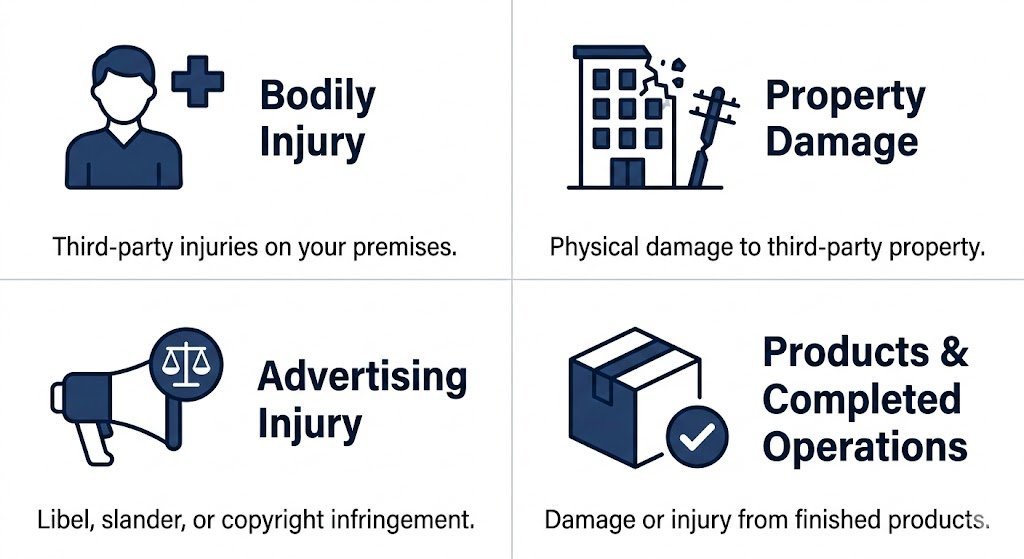
The policy covers three core areas:
- Bodily injury: Physical harm caused to a non-employee by your business operations, products, or premises.
- Property damage: Damage your business causes to someone else’s property.
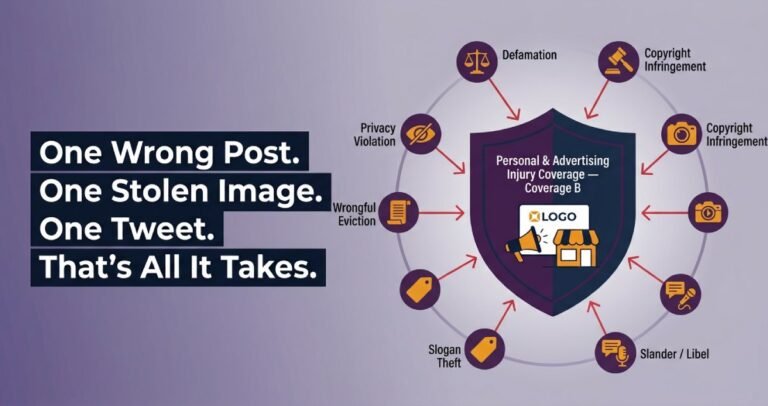
- Personal and advertising injury: Non-physical harm such as defamation, slander, libel, or copyright infringement in your marketing.
Critically, GL insurance also covers your legal defense costs attorney fees, court costs, and settlement payments even if the lawsuit against you turns out to be completely groundless. In a litigious business environment, that defense coverage alone often justifies the premium.
For a detailed breakdown of each coverage component, visit our general liability insurance page.
The 4 Core Areas of General Liability Coverage
1. Bodily Injury Liability
This is the coverage most business owners picture when they hear ‘general liability.’ If a customer, visitor, or member of the public is physically injured as a result of your business operations on your premises or because of your work bodily injury liability pays for their medical expenses, lost wages, and any legal claims that follow.
Common examples include a customer slipping in your store, a passerby injured by equipment at a job site, or a client hurt by a product your business provided.
2. Property Damage Liability
If your business operations cause damage to someone else’s property, this coverage steps in. A cleaning crew that accidentally breaks a client’s expensive equipment. A plumber whose work leads to water damage in a customer’s home. A landscaping company that damages a fence. These are exactly the scenarios property damage liability coverage is built for.
Note: this covers damage you cause to others not damage to your own business property. Your own equipment and assets are covered under a commercial property policy or BOP.
3. Personal and Advertising Injury
This is one of the most misunderstood components of GL coverage. It protects your business from claims arising out of your advertising activities and business conduct specifically defamation (libel or slander), copyright infringement in ads, invasion of privacy, and false arrest or wrongful eviction.
If a competitor claims your marketing copy unfairly misrepresented their business, or an individual alleges your social media content defamed them, this coverage pays for your defense and any settlement.
4. Products and Completed Operations
Does your business manufacture, sell, or install products? Do you complete work on someone else’s property? If so, your liability doesn’t end when the transaction does. Products and completed operations coverage protects you if a product you sold causes injury after it leaves your hands, or if your completed work causes harm down the line a defective installation, a structural failure, a contaminated product.
This is especially critical for contractors, manufacturers, food service businesses, and anyone in trades or product-based retail.
What General Liability Insurance Does NOT Cover?
Understanding the exclusions in your GL policy is just as important as understanding what it covers. One of the most common and costly misconceptions is assuming that general liability is a catch-all business insurance policy. It isn’t.
General Liability Insurance: Coverage vs. Exclusions
| What General Liability COVERS | What General Liability Does NOT Cover |
|---|---|
| ✅ Third-party bodily injury (e.g., customer slip-and-fall) | ❌ Your own employee injuries (covered by Workers’ Comp) |
| ✅ Third-party property damage caused by your business | ❌ Damage to your own business property (needs commercial property) |
| ✅ Personal and advertising injury (libel, slander, copyright) | ❌ Professional errors or bad advice (needs E&O / Professional Liability) |
| ✅ Products and completed operations liability | ❌ Company-owned vehicles or business driving (needs commercial auto) |
| ✅ Legal defense costs, even for groundless lawsuits | ❌ Intentional or criminal acts by the insured |
| ✅ Medical payments for on-site injuries (regardless of fault) | ❌ Cyber incidents or data breaches (needs cyber liability coverage) |
This is why GL is a starting point, not a complete insurance solution. Most businesses will need it paired with at least workers’ compensation, commercial property, and depending on operations commercial auto, professional liability, or cyber coverage. Our blog comparing general liability vs. professional liability insurance is a useful read for businesses that provide professional services.
How Much Does General Liability Insurance Cost for Small Businesses?
GL insurance is considerably more affordable than most business owners expect especially when weighed against the cost of a single uninsured claim. Nationally, the average small business pays between $42 and $70 per month for a standard $1M/$2M GL policy. Annual premiums typically range from $500 to $3,000+ depending on your industry and risk profile.
Florida-specific note: Florida small businesses pay approximately $144/month ($1,732/year) on average for GL coverage about 17% above the national average, reflecting the state’s higher litigation activity, weather exposure, and dense commercial environment. (MoneyGeek, 2026 Florida GL Cost Report)
General Liability Insurance Cost by Business Type — 2026
| Business Type | National Avg. Annual Cost | Florida Avg. Annual Cost | Risk Notes |
|---|---|---|---|
| Retail / Storefront | $500–$1,200/yr | $900–$1,800/yr | Moderate — slip-and-fall exposure |
| General Contractor | $1,500–$3,500/yr | $2,200–$5,000/yr | High — on-site injury risk |
| Restaurant / Food Service | $800–$2,000/yr | $1,200–$2,800/yr | High — public interaction, food liability |
| Consulting / Professional Svcs | $400–$900/yr | $600–$1,200/yr | Low–Moderate — limited physical exposure |
| Landscaping / Lawn Care | $900–$2,500/yr | $1,400–$3,200/yr | Moderate–High — equipment, property damage risk |
| Cleaning Services | $500–$1,500/yr | $800–$2,000/yr | Moderate — property damage on client sites |
| IT / Tech Services | $400–$800/yr | $600–$1,100/yr | Low — typically needs E&O alongside GL |
Key Factors That Affect Your GL Premium
- Industry and risk classification: Construction, food service, and manufacturing typically pay more due to higher physical liability exposure.
- Annual revenue and payroll: Premiums scale with the size of your operations larger revenue or payroll generally means a higher premium.
- Business location: States with higher litigation rates (like Florida) or weather risks carry higher premiums.
- Claims history: A clean claims record can qualify you for lower rates; prior GL claims will increase your premium meaningfully.
- Policy limits selected: Higher per-occurrence or aggregate limits increase your premium but provide significantly better protection.
- Deductible: Choosing a higher deductible lowers your monthly premium but increases your out-of-pocket cost per claim.
💡Cost vs. Risk Reality: A single slip-and-fall claim averages $45,000 in total costs. A reputational harm lawsuit averages $35,000+ in legal fees alone. At $50/month, GL insurance pays for itself the moment a single claim occurs.
Understanding GL Policy Limits: Occurrence vs. Aggregate
When shopping for general liability insurance, you’ll encounter two key limit figures that define how much protection you actually have:
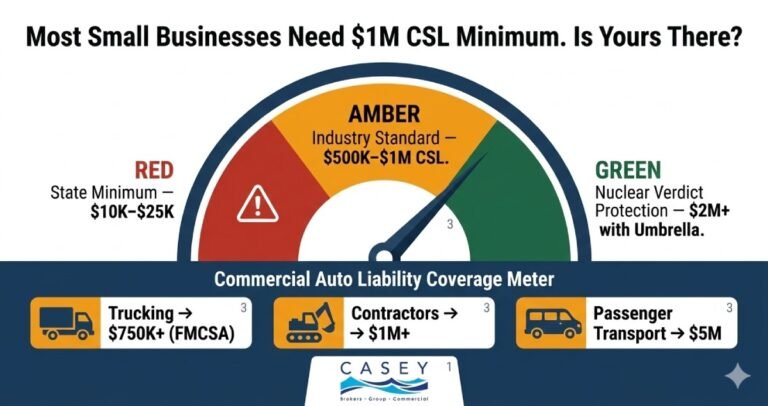
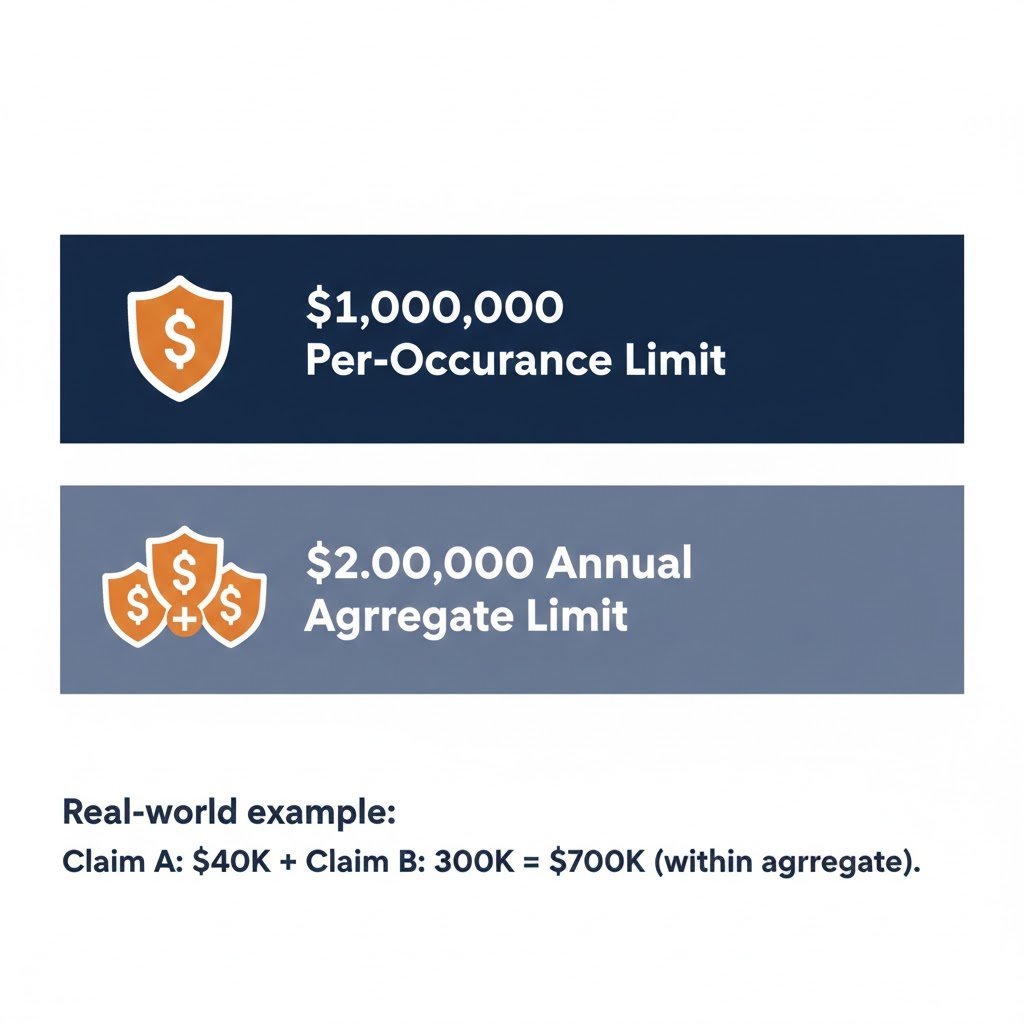
- Per-occurrence limit: The maximum your insurer will pay for any single incident or claim. The standard for small businesses is $1,000,000 per occurrence.
- Aggregate limit: The total maximum your policy pays across all claims within the policy year. The standard aggregate is $2,000,000 meaning your policy can respond to multiple claims up to that combined total.
A $1M/$2M policy is the most common configuration for small to mid-size businesses and satisfies most landlord, contractor, and client certificate of insurance (COI) requirements. If your industry or contract demands higher limits, a commercial umbrella policy is the most efficient way to extend coverage without restructuring your primary GL policy.
What is a Certificate of Insurance (COI)? A COI is a summary document issued by your insurer that proves you carry active GL coverage. It lists your policy limits, carrier, and coverage dates. Landlords, general contractors, government agencies, and large clients routinely require a COI before allowing you to work on their premises or sign a contract. Obtaining one is standard practice your insurer or agent can provide it quickly once your policy is active.
Who Needs General Liability Insurance?
Virtually every business that interacts with clients, operates on third-party premises, or sells or installs products. More specifically:
- Contractors and tradespeople: Electricians, plumbers, HVAC technicians, painters, roofers property damage and injury risk is constant. Many states and licensing boards require proof of GL before issuing a contractor’s license.
- Retail and e-commerce businesses: Any business that sells physical products faces products liability exposure. Physical stores also carry premises liability risk.
- Restaurants and food service: High foot traffic, food-related illness claims, and slip-and-fall risk make GL essential for any food business.
- Cleaning and janitorial services: Working inside clients’ properties creates significant property damage exposure on every job.
- Healthcare and wellness businesses: Gyms, salons, spas, and therapy practices all carry premises liability and product liability exposures.
- Consultants and professional service firms: While professional liability (E&O) covers your advice, GL covers the physical and advertising liability side of your operations.
- Home-based businesses: Homeowners insurance explicitly excludes business-related liability. If clients visit your home office or you conduct any client work, you need GL.
Even businesses with very low physical liability risk like software firms or online-only businesses often need GL to satisfy client and vendor contract requirements before they can operate. A client’s master service agreement requiring $1M in GL is common even for digital service businesses.
General Liability vs. Other Business Insurance Coverages
One of the most frequent questions from business owners is how GL relates to other commercial policies. Here’s a quick-reference breakdown:
- GL vs. Professional Liability (E&O): GL covers physical and advertising harm to third parties. Professional liability covers financial harm from your professional errors or omissions. Service businesses often need both. See our full comparison blog.
- GL vs. Workers’ Compensation: GL protects against third-party claims. Workers’ comp covers your own employees for on-the-job injuries. These are entirely separate policies with no overlap most businesses need both.
- GL vs. Commercial Property: GL covers damage you cause to others’ property. Commercial property covers damage to your own business assets.
- GL vs. Business Owners Policy (BOP): A BOP bundles GL with commercial property and business income coverage. For most small businesses, a BOP is the most cost-efficient way to carry GL alongside other essential coverage.
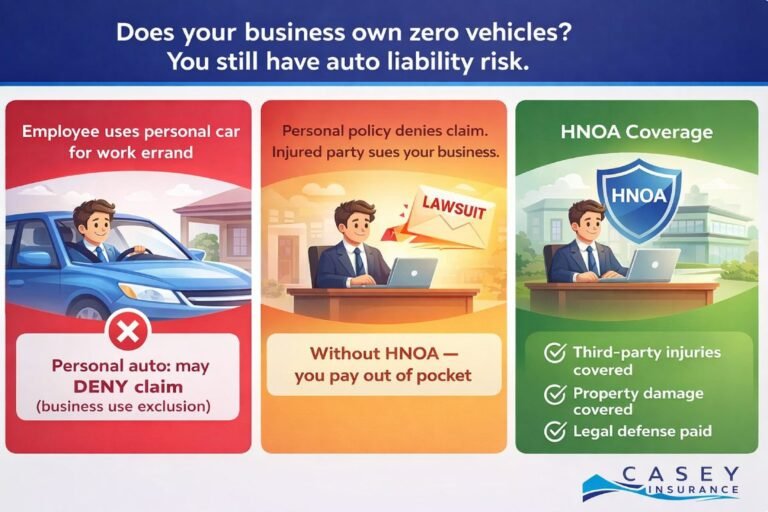
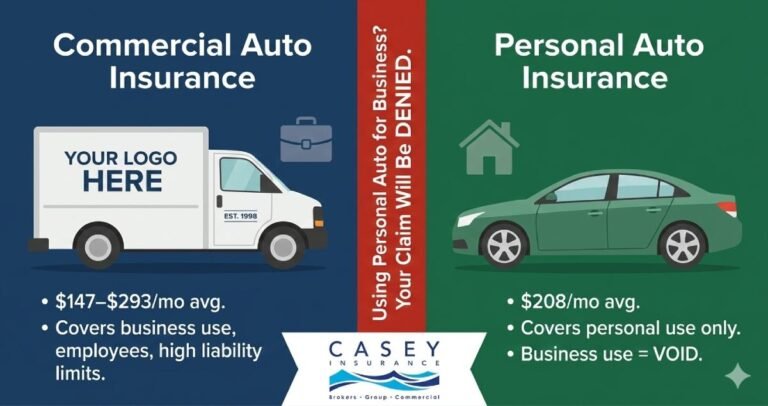
- GL vs. Commercial Auto: GL does not cover vehicle accidents, even if the vehicle is used for business. Commercial auto insurance is a separate, required policy for any business vehicle use.
What Business Owners Should Know About the 2026 GL Insurance Market
The commercial general liability market in 2026 is entering a period of rate stabilization after several years of significant premium increases but carriers are still applying cautious underwriting, particularly for businesses with high public interaction, construction operations, or historically volatile claims histories.
Key trends affecting GL policyholders this year:
- Nuclear verdicts are driving caution in underwriting: Large jury awards sometimes called ‘nuclear verdicts’ in liability cases have made carriers more selective and are maintaining upward pressure on premiums in high-risk industries like construction and hospitality.
- Social inflation continues to affect claim costs: Broader jury sympathies and aggressive plaintiff litigation strategies are increasing average settlement values, particularly for bodily injury claims.
- Florida’s legal environment adds cost: Recent tort reform legislation (HB 837) aimed to reduce frivolous lawsuits, but Florida’s litigation environment remains active a contributing factor to the state’s above-average GL premiums.
- AI-driven underwriting is becoming more granular: Carriers are increasingly using claims data analytics and real-time risk signals to price GL more precisely. Businesses with documented safety programs and clean claims histories have more pricing leverage than before.
Frequently Asked Questions: General Liability Insurance
General liability insurance covers third-party bodily injury, property damage caused by your business, and personal/advertising injury claims (like defamation or copyright infringement). It also pays your legal defense costs attorney fees and court costs even for groundless lawsuits.
Yes, in most cases. Homeowners insurance explicitly excludes business-related liability meaning if a client visits your home office and is injured, or if your business activities cause harm, you have no coverage under a personal policy. Additionally, most client contracts and freelance platform requirements mandate GL coverage even for remote or digital businesses.
The standard for most small businesses is $1,000,000 per occurrence / $2,000,000 aggregate. This satisfies the majority of landlord, contractor, and client COI requirements. Businesses in higher-risk industries (construction, manufacturing, hospitality), those with significant revenue, or those with contractual requirements above the standard should consider higher limits.
Florida does not mandate general liability insurance by state law for most business types. However, contractors in Florida are required to carry GL coverage as a condition of their state contractor’s license. Beyond legal requirements, landlords, clients, and general contractors routinely require proof of GL (a COI) before allowing a business to operate on their premises or enter a contract.
Yes and for most small businesses, a Business Owners Policy (BOP) is the most cost-efficient way to carry GL. A BOP bundles general liability, commercial property coverage, and business income protection into a single policy, typically at a lower combined premium than purchasing each separately. BOPs are available to most small to mid-size businesses that don’t operate in high-risk industries like construction or manufacturing.
Get the Right General Liability Coverage for Your Business
General liability insurance isn’t just a checkbox it’s the financial foundation that allows your business to operate confidently in a world where accidents, disputes, and lawsuits are a daily reality. The question isn’t whether you need it. The question is whether the coverage you have is actually built for your business.
Our team of experienced commercial insurance advisors helps businesses across Florida and nationwide build GL coverage that fits their actual risk profile not just the minimum that satisfies a contract. Explore our general liability insurance solutions, and products and completed operations coverage or contact us for a customized quote today.