


Here’s a scenario most contractors don’t expect: you finish a project, the client signs off, payment is collected, and you move on to the next job. Six months later, you get a call from an attorney. A structural defect in the work you completed has caused a collapse and someone was injured.
Your standard general liability policy? It stopped covering that project the moment you walked off the job site. Unless you have products and completed operations insurance, you’re facing that lawsuit on your own.
This is one of the most dangerous and most overlooked gaps in contractor liability insurance and in 2026, with contractor litigation rates rising and construction claim costs up 10–15% year over year, it’s a gap no contractor can afford to ignore.
The Core Problem:
Standard GL covers liability during ongoing work. The moment a job is complete, that protection ends and PCO coverage begins. Without it, every finished job is an uninsured exposure.
What Is Products and Completed Operations Coverage?
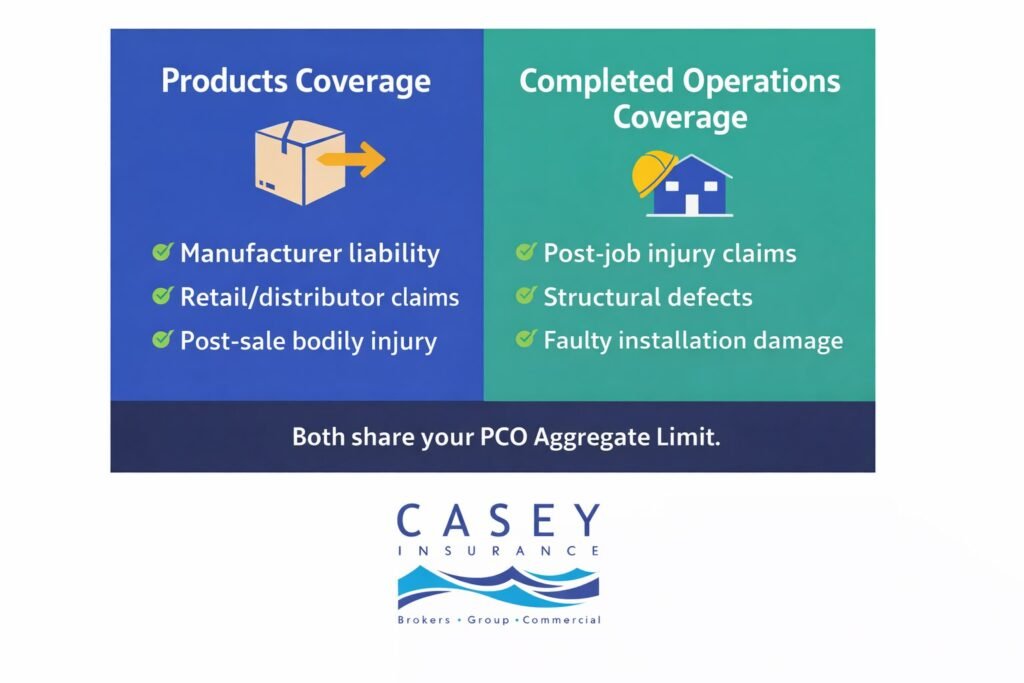
Products and completed operations (PCO) insurance is a two-part coverage found in most commercial general liability (CGL) policies. It protects contractors, manufacturers, and service providers from liability claims that arise after a job is finished or a product has left their hands.
The two parts:
- Products coverage: Applies to businesses that manufacture, sell, or distribute physical products. If a product you sold causes bodily injury or property damage after it’s in the customer’s possession, products coverage responds.
- Completed operations coverage: Applies to contractors and service providers. If your completed work a roof, an electrical installation, a plumbing system causes injury or property damage after the job is done, this coverage responds.
Both components share a single dedicated aggregate limit the products and completed operations aggregate which is separate from your general aggregate. Once that aggregate is exhausted, your insurer won’t pay additional PCO claims until the next policy period. This is why choosing the right aggregate limit matters as much as having the coverage at all.
The Liability Timeline: How Long Are You Exposed After a Job?
This is the question most contractors never think to ask and the answer is sobering. In many U.S. states, the statute of repose allows construction defect claims to be filed up to 10 years after project completion. In some jurisdictions, latent bodily injury claims have even longer windows.
Your exposure doesn’t end when the invoice is paid. Here’s how that timeline looks in practice:
Contractor Liability Exposure Timeline After Job Completion
| When | What Happens to Your Liability | PCO Coverage Implication |
|---|---|---|
| Day 1 – Job complete | Standard GL (ongoing ops) ends. PCO coverage activates. | PCO active if policy maintained |
| Months 1–12 | Most structural defect and installation failure claims surface here. | PCO active if policy maintained |
| Years 1–3 | Water intrusion, electrical faults, foundation issues may emerge. | PCO active if policy maintained |
| Years 3–10+ | Statute of repose still allows claims in many states. PCO must stay active. | PCO active if policy maintained |
| After retirement / sale | Your completed work exposure doesn’t retire with you coverage must continue. | PCO active if policy maintained |
Critical Point:
If you cancel your GL policy or switch carriers without maintaining completed operations coverage, you may erase protection for all past projects even those completed while your previous policy was active. Always confirm continuity of PCO coverage when changing insurers.
Which Contractors Need Products & Completed Operations Insurance?
Any contractor who completes work that has ongoing performance expectations. In practice, that’s nearly every trade and construction professional:
- General contractors and builders: Every structure you build is a long-term exposure. A home you built five years ago can still generate a completed operations claim today.
- Electricians and HVAC technicians: Faulty electrical work or improper HVAC installation can cause fires, flooding, and injury months or years after completion.
- Plumbers: Hidden water leaks from improper pipe connections or fixture installation are among the most common delayed-discovery claims in contracting.
- Roofers: Roof failures, water intrusion, and structural damage from improper installation frequently surface well beyond the project date.
- Landscapers and grading contractors: Drainage alterations that redirect water onto neighboring properties are a textbook completed operations claim often filed by third parties, not the original client.
- Manufacturers and product retailers: If you make, distribute, or sell physical products, the products liability side of PCO is essential your exposure travels with every unit sold.
General contractors also need to understand how PCO applies to subcontractor work. If a subcontractor’s work causes a post-completion claim, your PCO coverage generally responds but you must request a specific CG2037 additional insured endorsement to extend your completed operations protection to subs that name you as an additional insured. The standard additional insured form does not automatically extend this coverage.
What Products & Completed Operations Coverage Does NOT Cover
PCO is broad but it has important limitations contractors need to understand:
- Your own work product: PCO covers injuries and property damage caused by your work, not the cost to redo or repair your own faulty work. Fixing a bad installation is a workmanship issue not a PCO claim.
- Product recalls: Recall costs, whether regulatory or voluntary, are excluded. Manufacturers with significant recall exposure need a separate product recall policy.
- Claims during active operations: PCO only applies after work is complete. Injuries or damage that occur while you’re still on-site fall under the standard GL operations coverage.
- No bodily injury or property damage: PCO requires that an actual physical injury or property loss occurred. Financial losses alone such as a client’s claim that your work reduced their property’s value do not trigger PCO.
- Claims against deliberately defective work: Intentional or grossly negligent acts that knowingly cause harm are typically excluded, as with most liability coverages.
Understanding the Products & Completed Operations Aggregate Limit
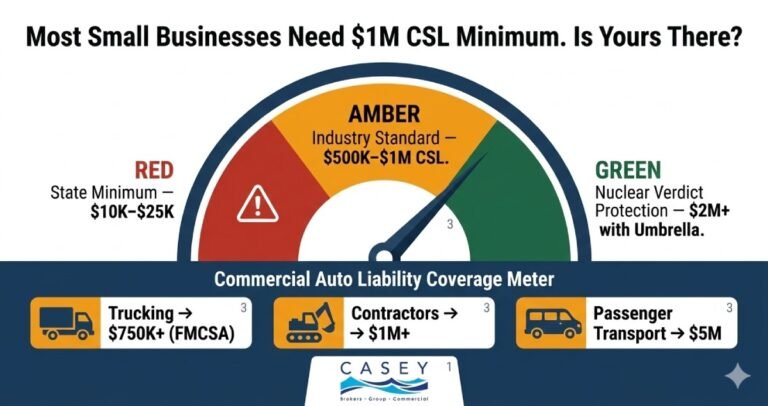
Your PCO coverage operates under its own aggregate entirely separate from your general aggregate limit. This is a critical distinction. If your general aggregate is $2M and your PCO aggregate is $2M, you have a potential total of $4M in separate coverage pools but once either aggregate is exhausted, that pool is empty until renewal.
For contractors handling multiple large projects simultaneously, a single significant completed operations claim can exhaust the PCO aggregate and leave all other past work unprotected for the rest of the policy year. This is precisely why contractors with high project volume or high-value work should:
- Review their PCO aggregate limit annually not just at first purchase
- Consider a commercial umbrella policy to extend protection above primary limits
- Confirm that contractual requirements many clients require PCO coverage for 3–5 years post-completion are met by their current policy structure
FAQs About Products & Completed Operations Insurance
It’s the component of your commercial general liability policy that protects you after a job is finished or a product has left your hands. Standard GL covers you during active operations PCO takes over the moment the work is complete, protecting you from bodily injury and property damage claims that arise from your finished work or sold products, often months or years later.
The PCO aggregate is the total maximum your insurer will pay for all products and completed operations claims within a single policy year. It’s a separate aggregate from your general aggregate. Once it’s exhausted, no additional PCO claims are covered until the policy renews. For contractors doing multiple or high-value projects, this limit should be reviewed annually — and a commercial umbrella policy should be considered to extend it.
At minimum, you should maintain PCO coverage for as long as your state’s statute of repose allows construction defect claims which is up to 10 years in Florida and many other states. Many client and GC contracts also require contractors to maintain PCO coverage for a specified number of years after project completion. Even after retiring or selling your business, your completed operations exposure doesn’t end consult your advisor about tail coverage options.
Don’t Let a Finished Job Become an Uninsured Liability
Every completed project is a long-term exposure and in today’s litigation environment, a claim can surface years after you’ve cashed the final check. Products and completed operations insurance is what stands between your past work and your business’s financial future.
Our commercial insurance advisors help contractors across Florida and nationwide build GL policies with the right PCO aggregate limits, correct endorsements, and long-term coverage continuity. Review our full general liability insurance options, or contact us for a contractor-specific coverage review today.