
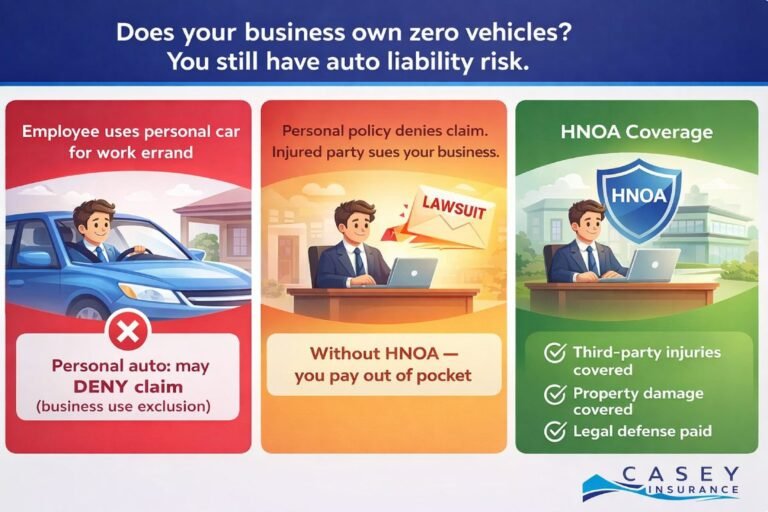


Your business doesn’t own a single vehicle. An employee drives their personal car to pick up supplies. On the way back, they rear-end another driver. The injured party sues your business.
The employee’s personal auto insurer denies the claim the policy excludes business use. Your general liability policy excludes auto incidents. Your commercial auto policy doesn’t exist. And now your business is directly exposed to a lawsuit with no coverage in place.
This is the exact scenario hired and non-owned auto insurance (HNOA) is designed to prevent. It is one of the most overlooked and most necessary commercial coverages for businesses that rely on employee or rented vehicles – which, in practice, includes the majority of small and mid-size businesses operating today.
The Coverage Gap
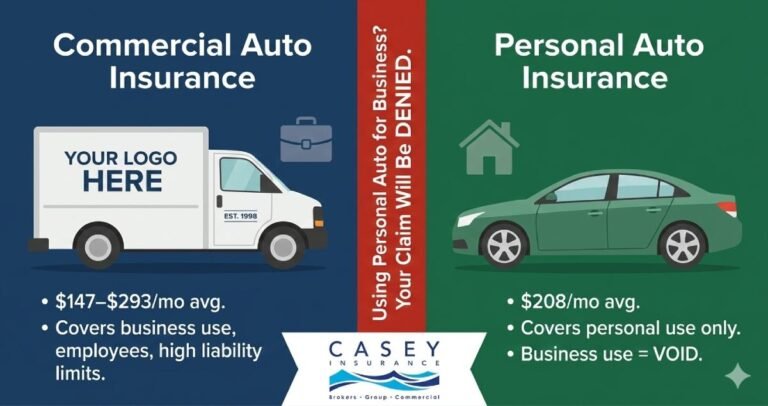
Commercial auto covers vehicles your business owns. General liability excludes auto accidents. Personal auto excludes business use. HNOA closes all three gaps — covering your business liability when vehicles you don’t own are used for business purposes.
What Is HNOA Insurance?
Hired and non-owned auto (HNOA) insurance is commercial auto liability coverage that protects your business from third-party injury and property damage claims arising from accidents involving vehicles your business does not own. It covers two distinct vehicle categories:
- Hired autos: Vehicles your business rents, leases, or borrows a cargo van rented for a delivery run, a leased car driven by a sales rep, a vehicle borrowed for a temporary project
- Non-owned autos: Personal vehicles owned by employees, contractors, or the business owner used for business purposes such as client visits, supply runs, or deliveries
HNOA covers your business’s liability to third parties the other driver’s medical bills, property damage, and your legal defense costs. It does not cover damage to the employee’s own vehicle, the employee’s own injuries (workers’ comp handles that), or cargo inside the vehicle.
HNOA typically acts as excess coverage for non-owned vehicles: the employee’s personal auto policy responds first, and HNOA steps in when that policy’s limit is exhausted or when the personal insurer denies the claim due to business use exclusion. For hired vehicles, HNOA responds after the rental company’s minimum liability coverage is exhausted.
Hired Auto vs. Non-Owned Auto: Side-by-Side
HNOA Insurance — Hired Auto vs. Non-Owned Auto Coverage Comparison
| 🔵 Hired Auto | 🟢 Non-Owned Auto | |
|---|---|---|
| What it is | Vehicles your business rents, leases, or borrows — rented van, leased car, borrowed equipment truck | Employee’s or owner’s personal vehicle used for a business errand, client visit, or delivery |
| Common examples | Rented van for a trade show; leased vehicle for a traveling sales rep; borrowed truck for a project | Employee drives own car to pick up supplies; owner visits client in personal vehicle |
| Personal auto covers it? | Rental company provides minimum state liability; HNOA covers what remains above that | Personal policy may deny claim citing business use exclusion — leaving your business liable |
| What HNOA pays | Third-party bodily injury + property damage + legal defense costs — up to your policy limit | Same: third-party BI + PD + defense. HNOA is excess — pays after personal policy limit is exhausted |
| What HNOA does NOT pay | Damage to the rented vehicle itself (use collision waiver or separate physical damage) | Damage to the employee’s personal car; employee’s own injuries (use workers’ comp) |
| Typical policy limit | $1M CSL — matching your GL or commercial auto limits (Insureon 2026 avg) | Same $1M CSL; higher limits available via umbrella endorsement |
| How it’s purchased | Endorsement on a commercial auto policy OR standalone HNOA policy OR added to GL/BOP | Same options — often one endorsement covers both hired and non-owned in a single add-on |
Does Your Business Need HNOA Coverage?
If any of the following apply to your business, the answer is yes:
- Employees occasionally drive their own vehicles to make deliveries, pick up supplies, or travel to client locations
- You or your team rent vehicles for business travel, trade shows, job sites, or out-of-town projects
- You use contractors or part-time workers who use their own vehicles on the job
- Your business does not own vehicles but employees drive on behalf of the company in any capacity
- Clients, contracts, or lenders require evidence of hired and non-owned auto liability coverage on your COI
The businesses that most commonly discover they needed HNOA after a claim include: consulting firms, marketing agencies, real estate brokers, staffing companies, catering and food businesses, trade contractors, and any service business where employees are regularly in the field without company-owned vehicles.
📌 No Company Vehicles ≠ No Auto Liability
Whenever an employee drives for your business even for a single errand liability for that trip can transfer to your company under the legal doctrine of respondeat superior (employer liability for employee actions in the course of work). HNOA is the coverage that responds when that liability is triggered.
How to Get HNOA Coverage
HNOA is available through three common structures your advisor can match the right option to your existing policy setup:
- Endorsement on a commercial auto policy: If you already carry commercial auto, HNOA can be added as an endorsement covering non-owned and hired vehicles not already on your fleet schedule
- Endorsement on a GL or BOP policy: Many carriers allow HNOA to be added to a general liability or Business Owners Policy — a cost-effective option for businesses with no owned vehicles
- Standalone HNOA policy: For businesses with significant non-owned vehicle exposure, a standalone policy may offer broader limits and more tailored terms
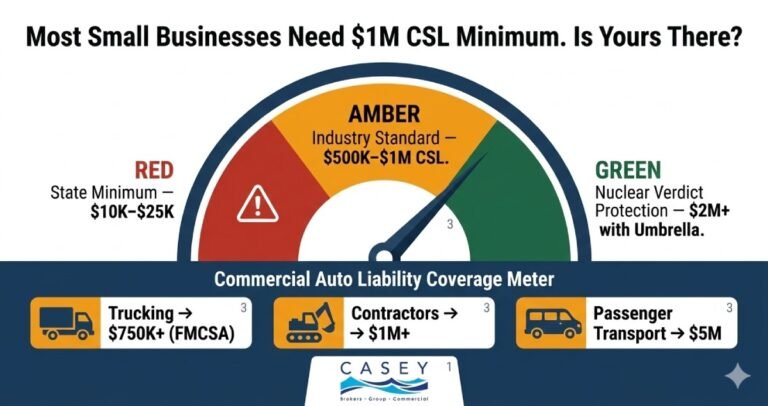
Limits typically match your GL or commercial auto policy — the industry standard is $1 million CSL. Higher limits are available via commercial umbrella. Premium is rated on the number of employees who drive and your estimated annual rental vehicle spend both low-cost inputs relative to the liability exposure HNOA addresses.
Frequently Asked Questions
HNOA covers your business’s liability to third parties bodily injury, property damage, and legal defense costs — when an employee uses their personal vehicle or your business uses a rented/hired vehicle for business purposes and an accident occurs. It does not cover damage to the vehicle being driven, the employee’s own injuries, or cargo in the vehicle.
Possibly yes. Your commercial auto policy covers vehicles listed on your fleet schedule — vehicles your business owns or leases directly. It does not automatically extend to employees’ personal vehicles or rented vehicles not on your policy. HNOA fills that gap. Many commercial auto policies allow HNOA to be added as an endorsement for non-owned and hired vehicles outside the primary fleet.
Their personal auto insurer responds first. However, many personal policies exclude or limit coverage for business use meaning the insurer may deny the claim or pay only up to a limited amount. Once the personal policy limit is exhausted or denied, your business becomes directly liable for the remaining damages. HNOA acts as excess coverage, stepping in to pay what the personal policy cannot or will not cover.
HNOA is generally one of the lower-cost commercial coverages because it is usually added as an endorsement to an existing GL, BOP, or commercial auto policy rather than purchased as a standalone policy. Premium is rated primarily on the number of employees who drive for work and your estimated annual rental vehicle spend. The average commercial auto policy limit for HNOA is $1 million CSL. Contact your advisor for a specific quote based on your employee count and driving exposure.
Close the Gap Before the Next Business Errand Becomes a Lawsuit
HNOA is not a complex or expensive coverage but it fills a liability gap that leaves hundreds of businesses exposed every year. If employees drive for your business in any capacity, or if your operation ever uses rented vehicles, contact our team to add HNOA to your existing commercial program today.