


Personal lines insurance protects the things you’ve worked your entire life to build your home, your vehicles, your belongings, and your financial security. Yet many people don’t fully understand what personal lines coverage actually includes, how it works, or why it’s absolutely essential for protecting their financial future.
Unlike commercial insurance that protects businesses, personal lines insurance safeguards individuals and families from the financial devastation that accidents, disasters, and liability claims can cause. Without proper coverage, a single house fire, car accident, or lawsuit could wipe out your savings, force you into bankruptcy, or saddle you with debt for decades.
This comprehensive guide explains what personal lines insurance is, what it covers, why you need it, and how to ensure you have appropriate protection for your unique situation.
What Is Personal Lines Insurance?
Personal lines insurance (also called personal insurance) refers to coverage protecting individuals and families not businesses from financial losses. These policies safeguard your personal assets, property, and liability exposure from various risks you face in daily life.
Think of personal lines insurance as a financial safety net. You pay relatively small, predictable premiums in exchange for protection against potentially catastrophic, unpredictable losses that could otherwise destroy your financial stability.
Personal Lines vs. Commercial Lines Insurance
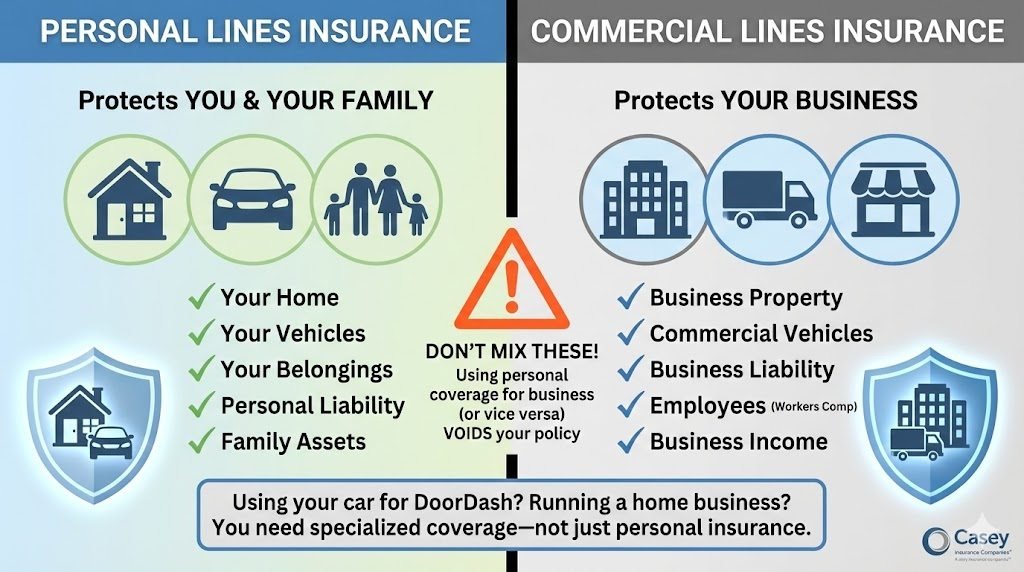
The insurance industry divides coverage into two broad categories:
Personal Lines Insurance: Protects individuals and families
- Home and property coverage
- Auto and vehicle coverage
- Personal liability protection
- Individual health, life, and disability coverage
- Personal umbrella policies
- Recreational vehicle coverage (boats, RVs, motorcycles)
Commercial Lines Insurance: Protects businesses and organizations
- Commercial property coverage
- Business liability insurance
- Workers compensation
- Commercial auto insurance
- Professional liability coverage
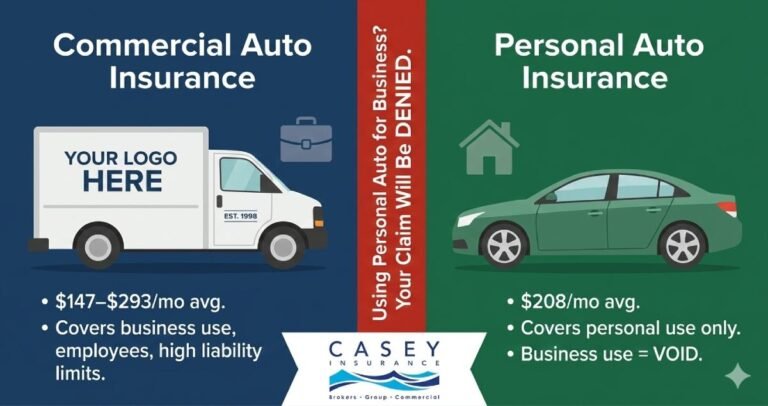
This distinction matters because using personal policies for business purposes (or vice versa) typically voids coverage entirely. If you run a home business or use your personal vehicle for work, you need specialized coverage addressing both personal and commercial exposures.
Core Types of Personal Lines Insurance
Personal lines insurance encompasses several distinct policy types, each protecting different aspects of your life and assets.
| Insurance Type | What It Protects | Who Needs It | Typical Annual Cost* | Key Coverage Components |
|---|---|---|---|---|
| Homeowners | Home structure, belongings, liability | Homeowners | $1,200 – $3,000 | Dwelling, personal property, liability, living expenses |
| Auto | Vehicles, liability, injuries | All drivers | $1,000 – $2,500 | Liability, collision, comprehensive, medical, uninsured motorist |
| Renters | Belongings, liability | Renters/tenants | $180 – $360 | Personal property, liability, living expenses |
| Umbrella | Additional liability | Asset owners | $150 – $400 ($1M) | Extra liability across all policies |
| Boat/Marine | Vessels, equipment, liability | Boat owners | $500 – $3,000+ | Hull, liability, equipment, navigation |
| Motorcycle | Bikes, liability | Motorcycle owners | $400 – $1,200 | Similar to auto coverage |
| RV | Motorhomes, trailers | RV owners | $600 – $2,000 | Vehicle, living quarters, belongings |
1. Homeowners Insurance
Home insurance protects your largest investment your house and the belongings inside it.
What Homeowners Insurance Covers:
Dwelling Coverage: Repairs or rebuilds your home’s structure after covered events like fire, windstorms, hail, lightning, or vandalism
Personal Property Coverage: Replaces your belongings furniture, clothing, electronics, appliances damaged or stolen during covered events
Liability Protection: Covers legal responsibility if someone is injured on your property or you accidentally damage others’ property
Additional Living Expenses: Pays for temporary housing, meals, and related costs if your home becomes uninhabitable during repairs
Medical Payments: Covers small medical expenses for guests injured on your property, regardless of fault
Standard homeowners policies typically don’t cover floods or earthquakes these require separate policies. Our Home Insurance specialists help identify and close these coverage gaps.
2. Auto Insurance
Auto insurance protects you from financial losses related to vehicle accidents and damage.
What Auto Insurance Covers:
Liability Coverage: Pays for injuries and property damage you cause to others in accidents (legally required in most states)
Collision Coverage: Repairs or replaces your vehicle after accidents, regardless of fault
Comprehensive Coverage: Covers non-collision damage like theft, vandalism, fire, weather, or animal strikes
Medical Payments/PIP: Covers medical expenses for you and passengers after accidents
Uninsured/Underinsured Motorist Coverage: Protects you when at-fault drivers lack adequate insurance
Minimum state requirements often provide inadequate protection. Carrying only state minimums leaves you personally liable when claims exceed those limits.
3. Renters Insurance
Renters insurance protects tenants’ belongings and liability landlord policies don’t cover tenants’ possessions.
What Renters Insurance Covers:
Personal Property: Your belongings furniture, electronics, clothing, jewelry against theft, fire, and other covered perils
Liability Protection: Legal responsibility if you accidentally cause injuries or property damage to others
Additional Living Expenses: Temporary housing costs if your rental becomes uninhabitable
Medical Payments: Small medical expenses for guests injured in your rental
Renters insurance is remarkably affordable often $15-30 monthly yet provides essential protection many renters overlook.
4. Umbrella Insurance
Umbrella policies provide additional liability coverage beyond your home and auto policy limits.
Why Umbrella Coverage Matters:
Standard home policies typically include $300,000-$500,000 liability coverage. Auto policies often max at $250,000-$500,000. If you cause serious accidents resulting in $2 million claims, you’re personally liable for amounts exceeding your policy limits.
Umbrella policies provide an additional $1-5 million (or more) in liability coverage across all your policies—home, auto, boat, recreational vehicles. This protects your assets, savings, and future earnings from devastating lawsuits.
The cost is surprisingly affordable typically $150-300 annually for $1 million coverage, then roughly $75-100 per additional million.
5. Recreational Vehicle Insurance
Beyond standard home and auto, personal lines insurance includes specialized coverage for:
Boat and Marine Insurance: Our Marine Insurance programs protect recreational and high-value vessels
Motorcycle Insurance: Coverage for bikes, scooters, and similar vehicles
RV Insurance: Protection for motorhomes, travel trailers, and campers
ATV and Off-Road Vehicle Coverage: Insurance for recreational off-road vehicles
Each requires specialized policies your auto insurance doesn’t automatically cover motorcycles or boats, and homeowners policies provide minimal coverage for these items.
Why Personal Lines Insurance Is Essential
Understanding why you need personal lines insurance helps you appreciate its value beyond “just another bill.”
Protection Against Financial Catastrophe
Consider these realistic scenarios and their financial impact:
House Fire: Complete loss of a $350,000 home plus $75,000 in belongings = $425,000 total loss. Without insurance, you lose everything and still owe the mortgage.
Serious Auto Accident: You cause an accident injuring three people. Medical bills, lost wages, and pain/suffering total $800,000. Your $300,000 auto liability pays its limit. You’re personally liable for $500,000 potentially forcing bankruptcy, home sale, and wage garnishment for years.
Liability Lawsuit: A guest falls down your stairs suffering permanent disability. Jury awards $1.5 million. Your $300,000 homeowners liability pays its limit. You owe $1.2 million personally.
Total Loss Vehicle: Your $40,000 car is totaled in an accident. Without collision coverage, insurance pays nothing toward replacement. You’re left with the remaining loan balance and no vehicle.
These aren’t worst-case scenarios they’re common claims that happen to ordinary people every day. Personal lines insurance stands between you and financial ruin.
Lender and Legal Requirements
Personal insurance isn’t always optional:
Mortgage Requirements: Lenders require homeowners insurance protecting their investment in your property. Without coverage, loans go into default.
Auto Loan Requirements: Financed vehicles require comprehensive and collision coverage protecting the lender’s interest.
State Law Requirements: Most states legally require minimum auto liability coverage. Driving without insurance results in fines, license suspension, and personal liability.
Landlord Requirements: Many landlords require tenants to carry renters insurance.
Asset Protection
The more you own, the more you need to protect:
If you have $500,000 in total assets (home equity, retirement accounts, savings, investments) but carry only $300,000 in liability coverage, you’re self-insuring $200,000 of exposure. Plaintiffs in lawsuits can pursue all your assets to satisfy judgments exceeding insurance limits.
Personal lines insurance protects what you’ve built from being taken away due to accidents, disasters, or liability claims.
Peace of Mind
Beyond financial protection, proper insurance provides psychological benefits:
- Freedom from constant worry about “what if” disasters
- Ability to enjoy your home, vehicles, and possessions without fear
- Confidence that your family’s financial security is protected
- Sleep-at-night peace knowing you’re covered when emergencies occur

What Personal Lines Insurance Doesn’t Cover
Understanding exclusions prevents false assumptions about protection.
Common Exclusions Across Personal Policies
Intentional Acts: Deliberately causing damage or injuries isn’t covered
Business Activities: Using personal property for business purposes typically voids coverage (home businesses, commercial vehicle use, renting property)
Wear and Tear: Normal aging, deterioration, and maintenance issues aren’t covered—only sudden, accidental damage
Certain Natural Disasters: Standard policies exclude floods, earthquakes, and sometimes sinkholes (requiring separate coverage)
High-Value Items: Jewelry, art, collectibles often have coverage sublimits ($1,000-$5,000) requiring separate scheduling for full protection
Coverage Gaps to Address
Flood Insurance: If you’re in flood-prone areas, separate flood coverage through the National Flood Insurance Program or private insurers is essential
Earthquake Coverage: Available as endorsements to homeowners policies in seismic zones
Valuable Items Scheduling: Separately schedule jewelry, art, collections, and expensive items exceeding sublimits
Identity Theft Coverage: Often available as inexpensive add-ons to homeowners or renters policies
Equipment Breakdown: Home systems and appliances coverage may require endorsements
How Much Personal Lines Insurance You Need
Determining appropriate coverage requires honest assessment of your situation.
Homeowners Insurance Coverage Amounts
Dwelling Coverage: Should equal full replacement cost of your home (not market value or tax assessment). Get professional replacement cost estimates.
Personal Property: Typically 50-70% of dwelling coverage, but verify this covers your actual belongings. High-value possessions require scheduling.
Liability Coverage: Minimum $300,000, but $500,000-$1 million recommended for most homeowners. Higher if you have substantial assets.
Additional Living Expenses: Typically 20-30% of dwelling coverage ensure adequate for your area’s housing costs.
Auto Insurance Coverage Amounts
Liability Limits: State minimums are dangerously inadequate. Recommended minimums:
- $100,000 per person / $300,000 per accident for bodily injury
- $100,000 for property damage
- Better: $250,000/$500,000/$100,000 or $500,000/$500,000/$100,000
Comprehensive and Collision: If your vehicle is worth over $3,000-$4,000, carry these coverages. Drop them when vehicle value falls below deductible amounts.
Uninsured/Underinsured Motorist: Match your liability limits protects you from inadequately insured drivers.
Medical Payments/PIP: $5,000-$10,000 minimum, higher if you lack health insurance.
Umbrella Coverage Needs
General guideline: Carry umbrella coverage at least equal to your total net worth. If you have $1 million in assets, carry at least $1 million umbrella coverage.
How Personal Lines Insurance Premiums Are Determined?
Understanding what affects your rates helps you manage costs effectively.
Factors Affecting Home Insurance Premiums
- Home value and rebuilding costs
- Location (weather risks, crime rates, fire protection)
- Age and condition of home
- Construction type and materials
- Claims history (yours and the property’s)
- Credit score (in most states)
- Deductible amount
- Coverage limits and endorsements
- Safety features (alarms, sprinklers, impact-resistant roofing)
Factors Affecting Auto Insurance Premiums
- Driving record (accidents, violations, claims)
- Age and experience
- Vehicle type, age, and value
- Annual mileage
- Location (urban vs. rural, crime rates)
- Credit score (in most states)
- Coverage levels and deductibles
- Safety features (anti-theft, airbags, autonomous emergency braking)
Strategies to Lower Personal Lines Insurance Costs
Quality coverage doesn’t have to break your budget.
Bundling Policies
Combining multiple policies with one insurer typically earns 15-25% discounts:
- Home + Auto: 15-25% savings
- Home + Auto + Boat: 20-30% savings
- Adding umbrella policies often includes additional discounts
Our specialists help bundle Home Insurance and Auto Insurance for maximum savings.
Increasing Deductibles
Higher deductibles reduce premiums:
- $500 → $1,000 deductible: Save 10-15%
- $1,000 → $2,500 deductible: Save additional 15-20%
Only increase deductibles to amounts you can comfortably afford during emergencies.
Safety and Security Improvements
Investments in protection earn discounts and reduce claims:
- Home security systems: 5-15% discount
- Fire/smoke alarms and sprinklers: 5-10% discount
- Impact-resistant roofing: 10-30% discount in wind-prone areas
- Anti-theft vehicle devices: 5-15% discount
- Defensive driving courses: 5-10% discount
Maintaining Good Credit and Claims-Free History
- Good credit scores reduce premiums 20-40% in states where credit-based insurance scoring is allowed
- Claims-free discounts increase over time—avoid filing small claims you can afford yourself
- Loyalty discounts reward staying with insurers 3-5+ years
Shopping and Comparing Regularly
Review coverage and compare quotes every 2-3 years rates vary significantly between insurers. What was competitive five years ago may no longer be best value.
Choosing the Right Personal Lines Insurance Provider
Not all insurance companies provide equal value or service.
What to Look For
Financial Strength: Choose insurers with A.M. Best ratings of A- or better you need confidence they’ll pay claims years from now
Claims Service Reputation: Research claims handling reviews premium savings mean nothing if claims are denied or delayed
Coverage Options: Ensure insurers offer coverage you need specialty items, high-value homes, unique situations
Customer Service: Responsive agents and support when you need assistance
Digital Tools: Mobile apps, online policy management, and digital claims filing improve convenience
Local Representation: Agents who understand local risks (hurricanes, earthquakes, floods) provide better guidance
Common Personal Lines Insurance Mistakes
Avoid these frequent errors that leave people underprotected:
1: Buying on Price Alone – Cheapest isn’t best if coverage is inadequate
2: Assuming Minimum Coverage Is Adequate – State minimums rarely provide sufficient protection
3: Not Updating Coverage – Life changes (home improvements, vehicle purchases, asset growth) require coverage updates
4: Ignoring Replacement Cost vs. Actual Cash Value – ACV policies pay depreciated amounts—often inadequate for replacement
5: Failing to Schedule Valuable Items – Jewelry, art, collections need separate scheduling beyond standard sublimits
6: Not Reading Policy Exclusions – Know what’s not covered to avoid claim surprises
7: Letting Coverage Lapse – Even brief gaps can result in higher future rates and denied claims for incidents during lapses
Your Financial Protection Foundation
Personal lines insurance forms the foundation of your financial security. Without proper coverage, you’re gambling with everything you own your home, savings, vehicles, and future earnings.
The relatively small cost of comprehensive personal insurance is insignificant compared to the catastrophic losses it prevents. A $2,000 annual premium protecting $500,000 in assets from million-dollar liability exposure is obvious financial wisdom.
Don’t treat personal lines insurance as just another bill to minimize. View it as essential protection for everything you’ve worked to build and everything you hope to achieve. Proper coverage ensures that accidents, disasters, and unexpected events don’t derail your financial future.
Our experienced team helps individuals and families secure comprehensive personal lines protection matching their unique needs and budgets. We provide expert guidance on Home Insurance, Auto Insurance, and specialized coverage including Marine Insurance for boat owners.
We also offer Commercial Insurance for business owners needing protection beyond personal lines coverage.
Frequently Asked Questions
Replacement cost coverage pays to replace damaged items with new equivalents at current prices without depreciation. Actual cash value pays the depreciated value—original cost minus wear and tear. Example: Your 5-year-old $1,200 laptop is stolen. Replacement cost pays ~$1,200 for a new comparable laptop. Actual cash value might pay only $400-$600 accounting for age and depreciation. Replacement cost costs 10-20% more but provides significantly better protection.
No, personal auto policies explicitly exclude commercial use. Using your vehicle for food delivery, rideshare (Uber/Lyft), or any business purpose voids personal coverage. You need commercial auto coverage or specialized rideshare endorsements. Operating commercially on personal coverage leaves you completely uninsured with unlimited personal liability if accidents occur during business use.
Review coverage annually at renewal and whenever major life changes occur: home purchases or improvements, vehicle changes, marriage or divorce, children, significant asset growth, starting home businesses, acquiring valuable items, or retirement. Life changes affect both coverage needs and potential discounts. Annual reviews ensure coverage keeps pace with your evolving situation.